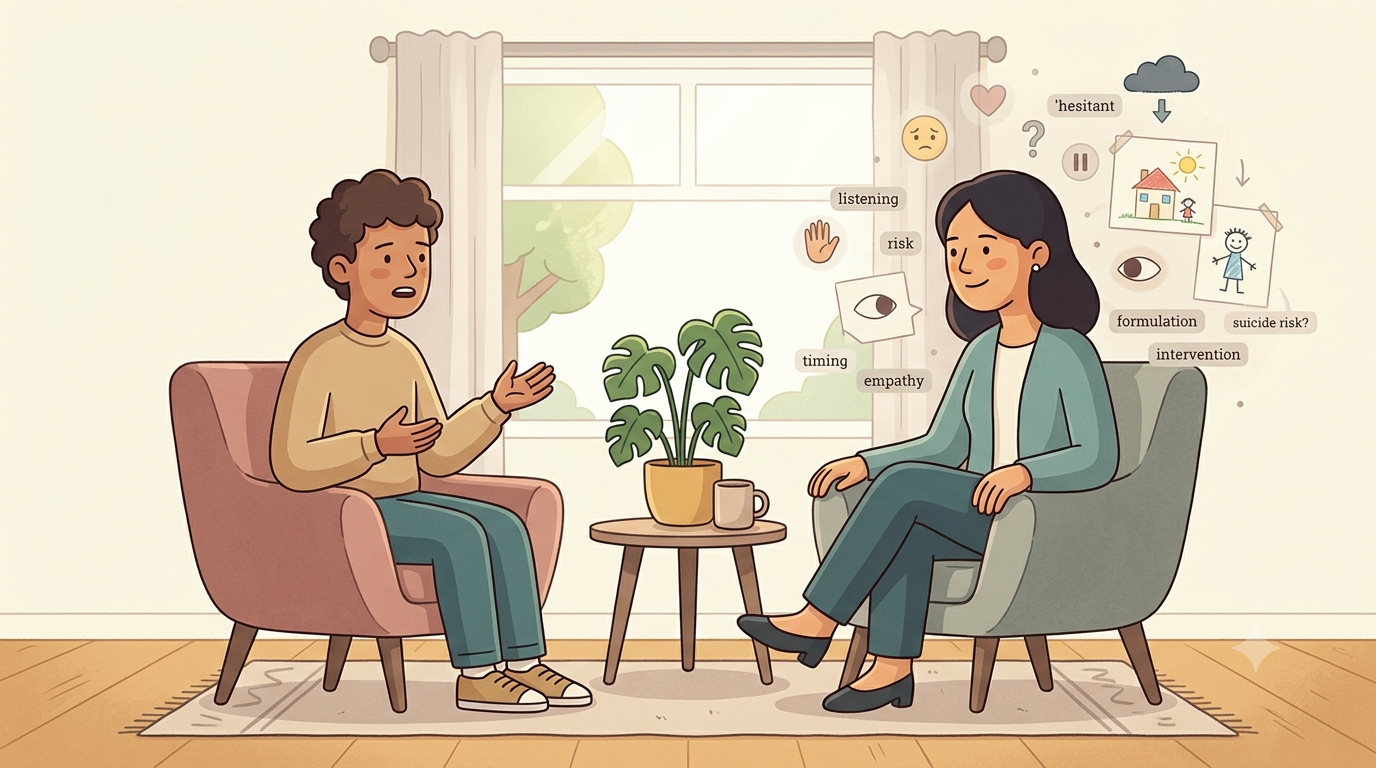
Psychotherapy is an effective treatment for mental disorders.
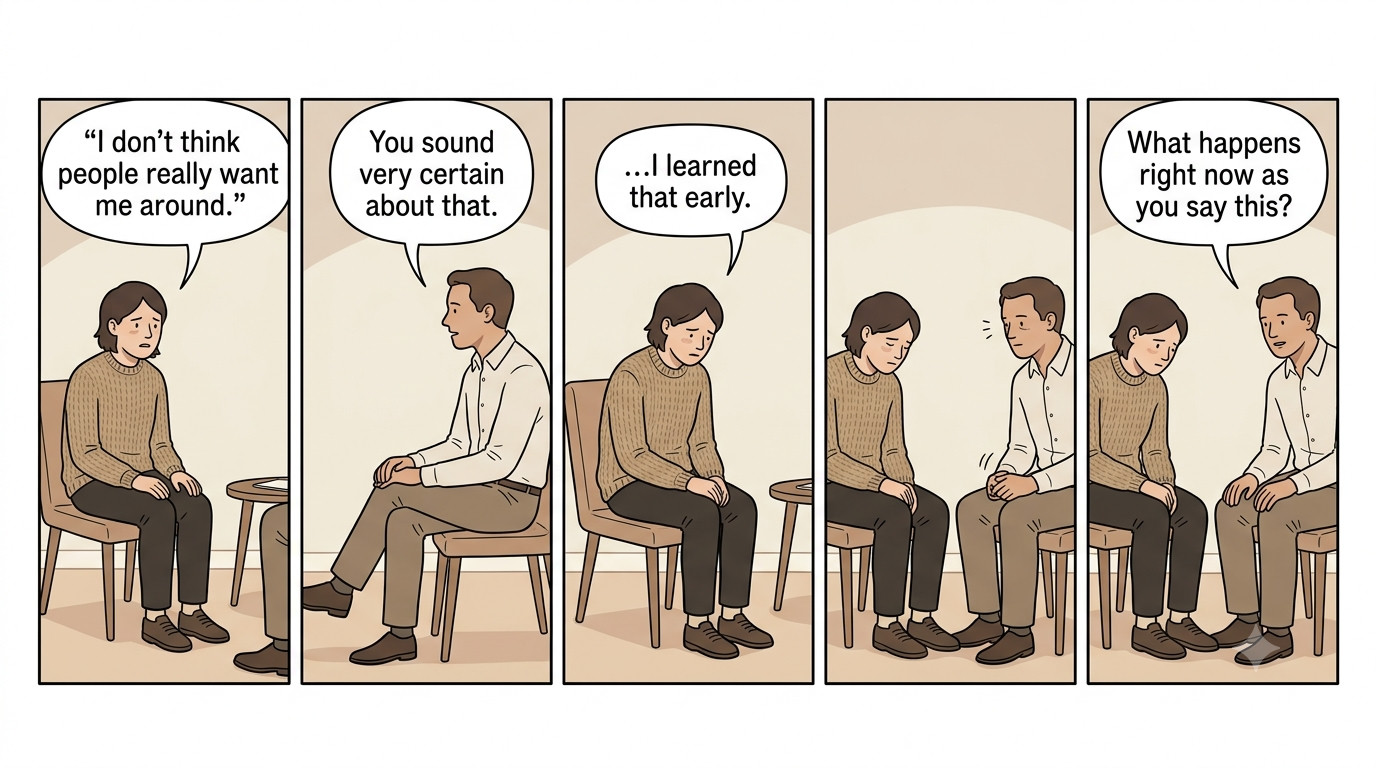
How evidence-based psychotherapy, quality assurance, and ambient listening are quietly reshaping the way mental health care is recorded, supervised, and improved.
Psychotherapy works, and its active ingredient is human interaction. What happens between therapist and patient rarely leaves the room — this talk traces why, and what is beginning to change.
Psychotherapy is an effective treatment for mental disorders.
Its active ingredient is human interaction — a trained, situational craft.
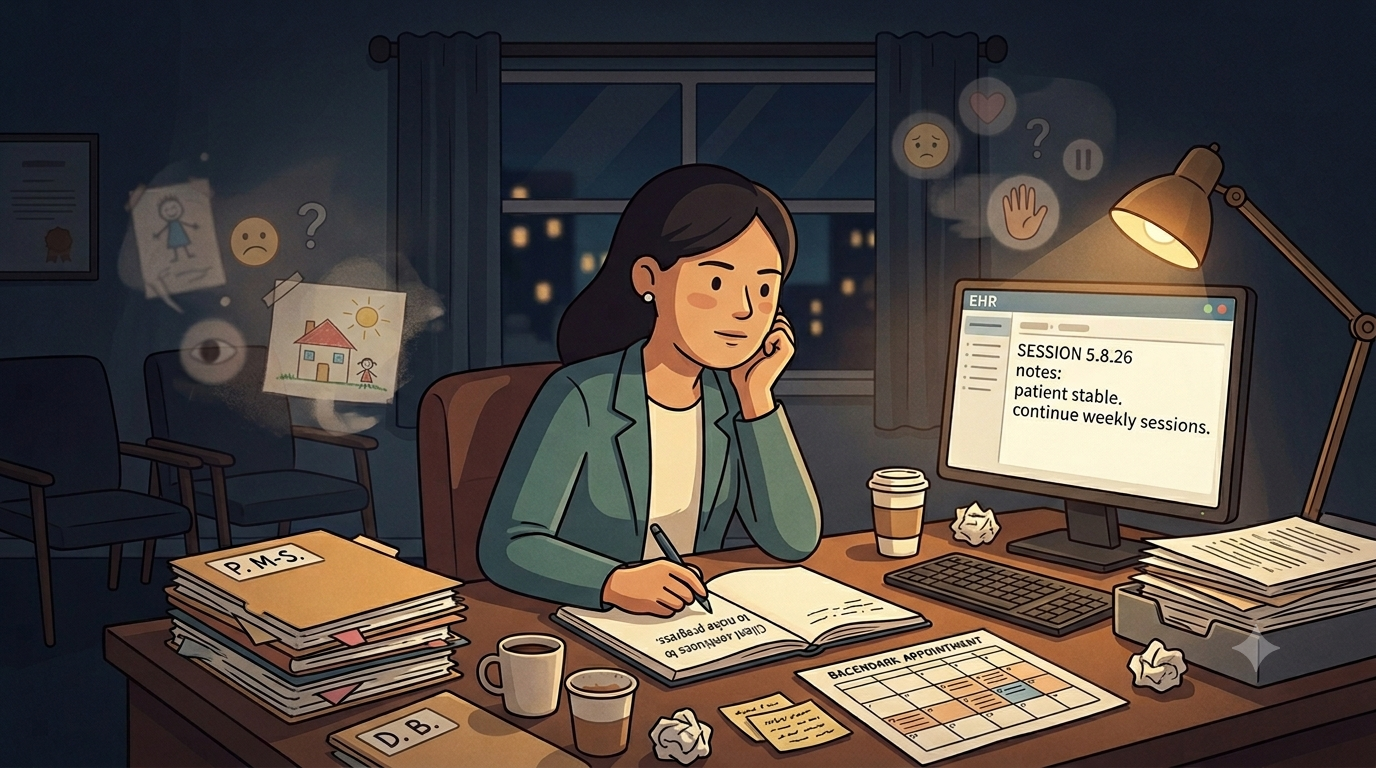
Documentation preserves only a fraction of what the session contains.
Ambient listening can make the conversation partially observable — therapists are beginning to open the box.
MHIRA, the platform I am working on, extends evidence-based assessment with clinician-approved ambient listening.
Average effect of psychological treatment vs. an inactive control, across 12 mental health problems. Larger bar = stronger effect.
Harrer, M. et al. (2025) — Effectiveness of Psychotherapy: Synthesis of a “Meta-Analytic Research Domain” Across World Regions and 12 Mental Health Problems. Psychological Bulletin, 151(5), 600–667.
1,029 randomized trials · 85,952 patients · Hedges' g · post-treatment vs. inactive control · doi: 10.1037/bul0000465
Outcome research demonstrated that psychotherapy produces reliable clinical change across disorders and treatment models.
This answered the question: Does psychotherapy work?
Process-outcome research identifies relational, therapist, and patient processes associated with therapeutic outcomes. Kazdin 2007 · Gómez Penedo & Flückiger 2026
Therapists learn theories, frameworks, techniques, and skills — then apply them in conversations that can't be fully scripted.
Swiss psychotherapy training overview · Rubo et al., 2020
Clinicians continuously filter and compress complex therapeutic interactions under conditions of limited time and imperfect memory.
Important therapeutic processes increasingly need to remain observable across time.
Sessions can become text.
Spoken interaction can now be transcribed with sufficient quality for clinical workflows.
Interaction structure becomes visible.
Speaker attribution preserves who said what and when.
Information can be selectively structured.
Language models can assist in filtering, organising, and presenting clinically relevant information.
Together, these technologies unlock information access to psychotherapeutic interaction in clinical practice.
Already entering healthcare workflows
multiple providers and startups deploying
MHIRA was initially developed as a platform for longitudinal mental health assessment and clinical continuity.
Ambient listening extended this persistence model into psychotherapy interaction itself.
MHIRA emerged from longitudinal mental health assessment before extending into ambient listening and structured psychotherapy documentation.
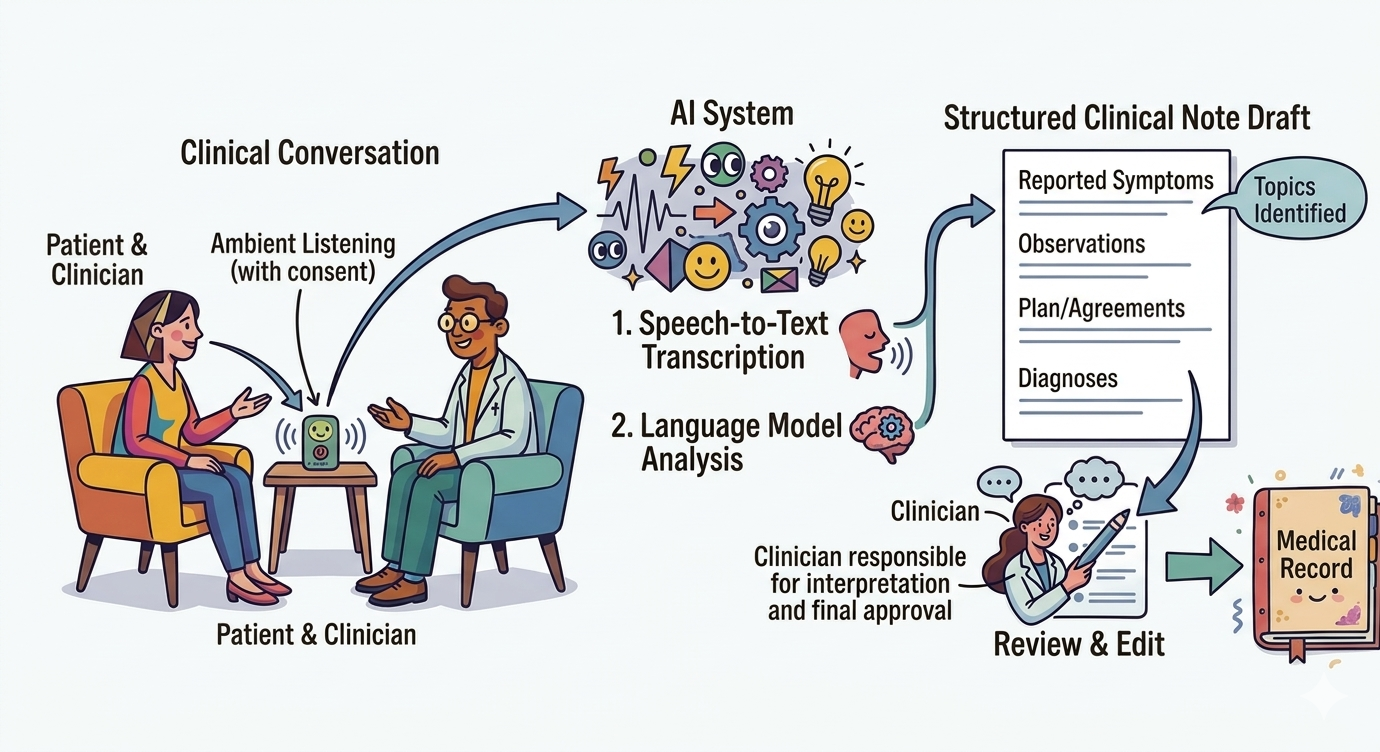
MHIRA produces structured drafts and reports that remain under clinician review and approval. Designed for supervision, accountability, continuity, and evidence-based assessment workflows.
Different clinical tasks require different forms of persistence.
The same therapeutic interaction can support multiple clinically meaningful perspectives.
If this opened a question rather than closing one, that was the point. The references, slides, and a written version of this talk live on the MHIRA research page — along with the work the talk draws from.